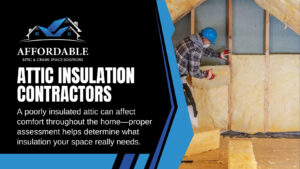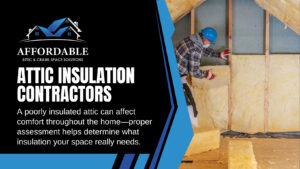
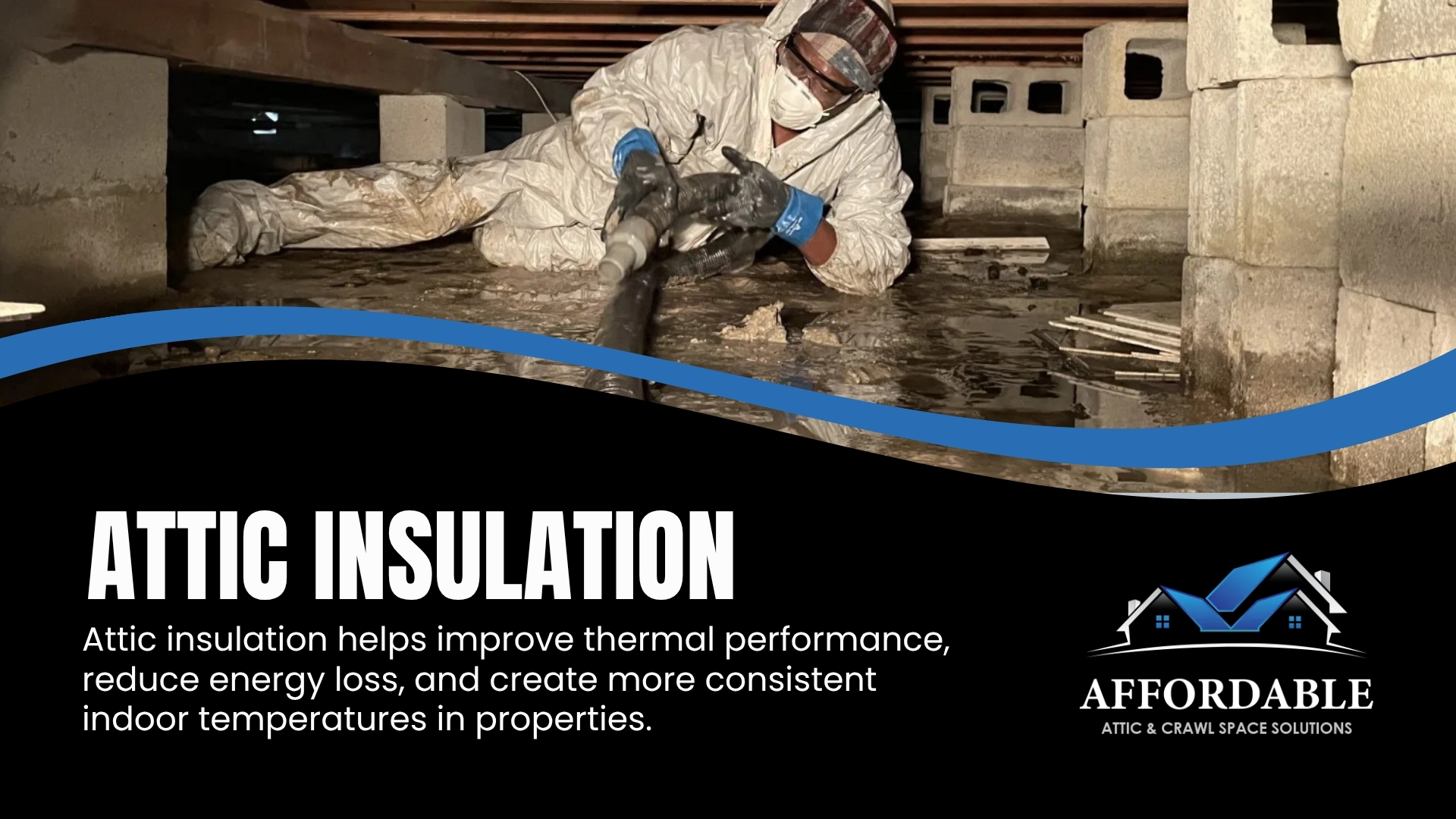
If the upstairs bedrooms in your Puyallup home run cold in January and stuffy in July, the attic is usually where that problem starts. Attic insulation in Puyallup is one of those projects homeowners put off for years because it’s invisible, tucked above a hatch nobody opens, until a winter heating bill finally forces the question. The good news is that fixing it is one of the most predictable, measurable home improvements available. You can check the depth before the work starts, check it again after, and see the difference in your Puget Sound Energy bill within a month or two.
This guide walks through how attic insulation actually works in a Puyallup home, what it costs, how it’s installed correctly, and how it connects to a handful of other issues – ventilation, pests, and moisture – that most articles on this topic skip entirely.
Why Attic Insulation Matters More in a Puyallup Home Than You Might Expect
Puyallup sits in a climate that’s mild compared to most of the country, but mild doesn’t mean easy on a house. Winters rarely dip far below freezing, yet the persistent damp air off the Puget Sound means moisture is almost always part of the equation; in a way, it simply isn’t in a drier climate like Denver or Phoenix. An attic with worn-out insulation doesn’t just leak heat; it also struggles to manage moisture moving up from the living space, which sets the stage for mold and wood rot over time.
Most pre-2000 homes in and around Puyallup were built to older, looser energy standards. When our crews open an attic hatch in a home from that era, it’s common to find R-19 or R-30 insulation, batts installed decades ago, flattened in places, gapped in others. Current Washington State energy code calls for attics to reach R-60. That’s not a small gap. Going from R-19 to R-60 roughly triples the insulating value overhead, and since heat rises, the attic is usually the single biggest source of heat loss in the entire house.
The result of that gap shows up in a few predictable ways: upstairs rooms that never feel quite right no matter how the thermostat is set, a furnace that runs longer than it should, and a heating bill that creeps upward year after year without an obvious cause. None of that is subtle once you know what to look for, but almost nobody thinks to check the attic until something else prompts them to.
How to Insulate an Attic: A Step-by-Step Overview
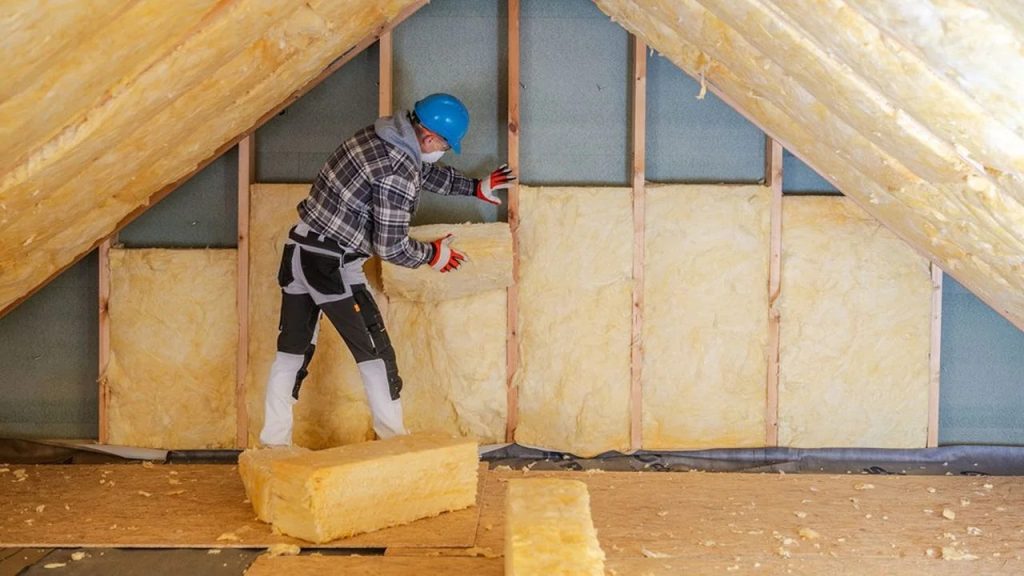
Homeowners searching “how to insulate an attic” are usually picturing a simple product swap: buy some insulation, roll it out, done. In practice, a proper attic insulation job in a Puyallup home follows a specific sequence, and skipping steps is exactly how a homeowner ends up paying for new material that underperforms within a year or two.
Measure what’s actually there. Before anything gets added, the existing insulation depth and condition need to be assessed. Two attics with identical square footage can need completely different amounts of new material depending on what’s already up there and how evenly it was installed the first time.
Check ventilation and look for pest or moisture signs. Soffit vents, ridge vents, and any gable vents need to be functioning before insulation goes in, not after. Blocked airflow traps moisture against the roof deck, which leads to mold and rot regardless of how good the insulation itself is.
Remove contaminated or compacted insulation. Old insulation that’s been flattened, soaked, or contaminated with rodent droppings doesn’t just underperform; it can actively work against a new installation. This gets vacuumed out, and the space is cleared before anything new goes in.
Seal air leaks around penetrations. Recessed lighting, plumbing stacks, electrical wiring, and the attic hatch itself are common points where warm air escapes straight through the ceiling plane. New insulation blown over an unsealed gap does very little, since the air simply moves through or around it.
Install new insulation to full code depth. Material, typically blown cellulose or blown fiberglass in this region, gets distributed evenly across the entire attic floor, not just the easy-to-reach center section, until it reaches the R-60 target.
Verify and document the finished depth. A few spot measurements confirm the job actually hit the target evenly, and that documentation is also what’s typically needed if you’re applying for a PSE rebate on the project.
How to Place Insulation the Right Way
There’s a difference between insulation being present in an attic and insulation being placed correctly, and this is where a lot of DIY attempts and rushed contractor jobs fall short. A few placement details matter more than people expect:
- Baffles at every soffit vent. These plastic or cardboard channels hold a gap between the insulation and the roof deck so outside air can still flow from the soffit to the ridge. Skip this step, and insulation blocking the vents can lead to trapped moisture and ice-related roof problems.
- Even coverage, not just a thick pile in the middle. It’s common to find attics where insulation is deep in the center and thin near the eaves, because that’s the easiest area to reach. Heat escapes just as easily through a thin edge as it does through an under-insulated center.
- Vapor barrier orientation, when one is present. A vapor barrier faces the living space below, not the roof deck above. Installed backward, it can trap moisture inside the insulation layer instead of letting it dissipate.
- Clearance around recessed lights and chimneys. Non-IC-rated fixtures and flue pipes need insulation kept a safe distance away, both for fire safety and to avoid compressing the insulation’s effectiveness right at those spots.
- No compression. Insulation works by trapping air, so packing it tightly into a low eave space or squeezing it under a low-clearance attic access actually lowers its R-value per inch.
Getting placement right is the difference between a number on paper and a number that actually holds up in the coldest week of the year.
What Is the Best Insulation for an Attic in a Climate Like Puyallup’s?
There isn’t a single universal answer here, but for most Puyallup attics, the choice comes down to a short list:
- Blown cellulose: Made from recycled paper treated with fire retardant, cellulose is dense, fills irregular spaces well, and performs well against air movement. It’s a common recommendation for Puget Sound area attics because it handles the region’s humidity reasonably well and settles less than some other blown materials over time.
- Blown fiberglass: Lighter than cellulose and non-combustible by nature, blown fiberglass is another strong option for reaching R-60 across an irregular attic floor. It resists moisture absorption slightly differently than cellulose, which matters in a damp climate.
- Fiberglass batts: Common in older construction, batts are precut and easier for a DIY install, but they struggle to fill gaps around joists, wiring, and irregular framing the way blown material does. In an older attic with uneven framing, batts alone often leave gaps that undercut the effective R-value.
- Spray foam: Effective and airtight, but significantly more expensive and typically reserved for specific applications like unvented roof assemblies rather than a standard vented attic top-up.
For the majority of Puyallup homes, bringing an attic up from R-19 or R-30 to the current R-60 target, blown cellulose or blown fiberglass installed to full, even depth is generally the most practical and cost-effective route. The right call still depends on the specific attic, its ventilation setup, and what’s already up there, which is exactly why a measured assessment matters more than a phone-quote guess.
How Much Does It Cost to Insulate an Attic in Puyallup?
This is the question most homeowners actually want answered, and it’s also the one that’s hardest to give a single number for, because so many variables affect it:
- Square footage of the attic floor. Larger attics need more material and more labor time, in a fairly direct relationship.
- Current insulation depth and condition. An attic starting near R-19 needs significantly more new material than one already sitting at R-38, even at the same square footage.
- Whether removal is needed first. Pulling out old, contaminated, or water-damaged insulation adds a step that a straightforward top-up doesn’t require.
- Material type. Blown cellulose, blown fiberglass, and batt insulation carry different material costs per square foot.
- Accessibility. A steep roof pitch, a cramped attic hatch, or obstacles like ductwork and old wiring can all add time to the job.
- Additional issues found along the way. Rodent damage, mold, or ventilation problems discovered during the assessment can affect the total scope, though these are typically priced as separate, clearly explained line items rather than folded silently into the insulation quote.
Because of all these variables, an honest attic insulation cost in Puyallup only comes from an actual measurement of your specific attic, not a square-footage guess over the phone. What can meaningfully reduce that cost, though, is the PSE weatherization rebate program, which is designed specifically to offset a portion of qualifying insulation upgrades for Puget Sound Energy customers. Rebate availability and amounts shift from year to year, so it’s worth asking your contractor for current details and for the documentation your project will need to qualify.
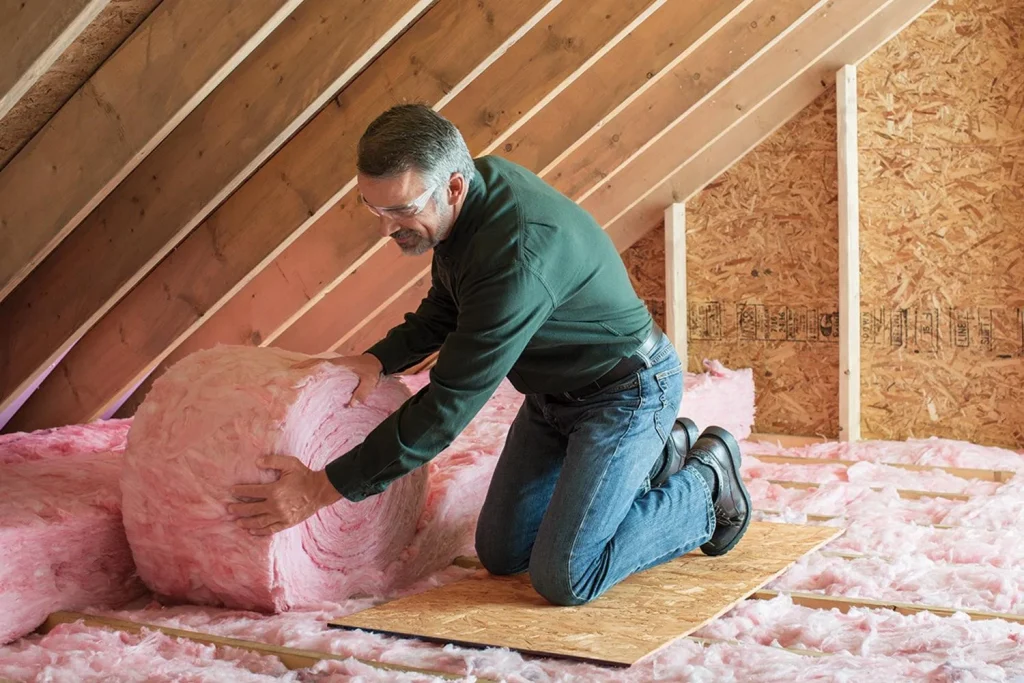
How to Install Insulation in Walls (And Why It’s a Different Job)
Attic insulation and wall insulation solve related problems, keeping conditioned air inside the house, but they’re installed in genuinely different ways, and it’s worth understanding the distinction if you’re weighing both projects.
In new construction or an open wall cavity, wall insulation typically means fitting fiberglass or mineral wool batts between the studs before drywall goes up, similar in concept to attic batts but installed vertically and pressed flush against the cavity without gaps or compression.
In an existing, finished wall, the approach changes completely. Since the drywall is already in place, installers use a technique called dense-pack cellulose or blown-in wall insulation, drilling small access holes (usually one per stud bay, patched afterward) and blowing insulation in under pressure until the cavity is fully packed. This method is common in older Puyallup homes that were built with little or no wall insulation at all, which was standard practice decades ago.
Wall insulation is a legitimate project on its own, but for most Puyallup homes with an under-insulated attic, the attic is still the higher-priority fix. Heat rises, so an attic sitting at R-19 typically accounts for a larger share of total heat loss than uninsulated exterior walls do. If you’re planning both, tackling the attic first and evaluating walls as a follow-up project is a reasonable, budget-friendly sequence.
Signs Your Puyallup Attic Needs New Insulation
A few practical signs tend to show up before a homeowner ever climbs into the attic to look:
- Upstairs rooms are noticeably colder in winter and hotter in summer than the rest of the house.
- Your heating bill has climbed gradually over a few years without a clear reason.
- You can see your roofline develop uneven snowmelt patterns during a cold snap, a sign of heat escaping unevenly through the attic.
- The last time anyone touched the attic insulation was more than 15-20 years ago, or nobody in the household actually knows.
- You’ve noticed pest activity, droppings, chewed material, or scratching sounds, which often means gaps exist that are also letting conditioned air escape.
- Visible mold, staining, or a musty smell near the attic hatch or upper closets.
Any one of these on its own is worth a look. A few of them together is a strong signal that it’s time for an actual measurement.
The Role of Ventilation, Pest Control, and Moisture in Long-Term Performance
It’s tempting to think of attic insulation as a standalone product, but in practice it’s one part of a connected system. A soffit vent blocked by insulation piled too high traps moisture against the roof deck. A gap chewed through by rodents lets conditioned air bypass the insulation entirely, no matter how thick the material is. Old insulation packed against a ridge vent can trap humidity that eventually shows up as mold on the framing.
This is why a thorough attic insulation job in Puyallup treats these as part of the same conversation rather than separate service calls discovered later. Sealing entry points, restoring proper airflow, and clearing any existing mold before insulating to full depth means the new material actually performs the way it’s rated to, instead of getting undermined by an issue hiding underneath it.
Making Attic Insulation More Affordable: The PSE Rebate
Puget Sound Energy runs a weatherization incentive program aimed at helping customers upgrade insulation, air sealing, and related energy efficiency measures in their homes. For a qualifying attic insulation project, that can mean a meaningful reduction in out-of-pocket cost, which is part of why so many Puyallup homeowners choose to finally tackle a decades-old under-insulated attic now rather than keep postponing it.
The specifics, eligibility requirements, rebate amounts, and required documentation change from program year to year, so it’s worth confirming current details before your project starts. A contractor who measures your attic depth before and after, and provides clear photo documentation, makes the rebate application process considerably smoother than trying to piece it together after the fact.
Choosing the Right Attic Insulation Contractor in Puyallup
Not every attic insulation contractor in Puyallup approaches a job the same way, and a few practical questions help separate a careful contractor from one quoting off a square-footage guess:
- Do they measure your actual current insulation depth before quoting, or estimate based on square footage alone?
- Will they tell you honestly if a top-up is sufficient, rather than defaulting to a full tear-out on every job?
- Do they address ventilation, pest entry points, and any moisture issues as part of the same visit, or treat those as unrelated?
- Do they document the finished depth with photos you can actually use for a PSE rebate application?
- Are they upfront about pricing and the reasoning behind it, rather than a vague flat number?
A contractor who measures first, explains the reasoning behind their recommendation, and documents the finished work is generally the one worth trusting with a project that’s otherwise invisible once it’s finished.
Attic Insulation Maintenance Tips for Puyallup Homeowners
Attic insulation isn’t an install-it and forget-it forever project, though it does need far less attention than most home systems. A few habits keep it performing well for decades:
- Check that soffit and ridge vents remain clear of debris or nesting material once a year, ideally in early fall before the cold weather sets in.
- After any pest control or rodent removal work, have the insulation inspected for damage or contamination near the affected area.
- If you notice a water stain on the ceiling below, have the attic checked promptly, since roof leaks and blocked ventilation can both compress or contaminate insulation quickly.
- Every several years, especially after any roof work, it’s worth confirming the insulation depth is still consistent across the whole attic and hasn’t settled or shifted.
Ready to Fix Your Puyallup Attic?
An under-insulated attic doesn’t announce itself loudly. It just shows up quietly, in a bedroom that’s never quite comfortable and a heating bill that’s a little higher than it should be, year after year. If your attic hasn’t been measured in a long time, or you’re not sure what’s actually up there, getting an honest assessment before the next cold stretch is a straightforward first step, and with the PSE rebate program in play, there’s rarely a better time to close that gap. Affordable Attic & Crawl Space Solutions serves Puyallup and the surrounding area with free, no-pressure attic assessments, so you know exactly what you have and what it would take to get it right.
FAQ’s
How much does it cost to insulate an attic in Puyallup?
Cost depends on attic size, current insulation condition, and how much new material is needed to reach the R-60 code target. Because every attic differs, an accurate number comes from an in-person measurement rather than a phone estimate. PSE rebates can offset part of a qualifying project.
What is the best insulation for an attic in the Puyallup area?
For most Puyallup attics, blown cellulose or blown fiberglass installed to full, even depth performs best, since both fill irregular framing well and handle the region’s humidity better than batts alone. The right choice still depends on your attic’s specific ventilation and condition.
How do I know if my attic needs new insulation?
Cold or overly hot upstairs rooms, a rising heating bill without a clear cause, uneven roof snow melt, or insulation that hasn’t been touched in 15-20 years are all strong signs. A quick depth check confirms it either way.
Does PSE offer a rebate for attic insulation?
Puget Sound Energy runs a weatherization program that can offset part of the cost of a qualifying attic insulation upgrade. Rebate amounts and requirements change by program year, so confirm current details and required documentation with your contractor.
Is attic insulation different from wall insulation?
Yes. Attic insulation is typically blown to full, even depth across the attic floor, while existing wall insulation uses a dense-pack method through small access holes since the wall cavity is already closed in by drywall.
How long does an attic insulation installation take in Puyallup?
Most straightforward attic insulation jobs are completed in a single day, though attics needing old insulation removed, ventilation repaired, or pest and moisture issues addressed first may take longer depending on scope.