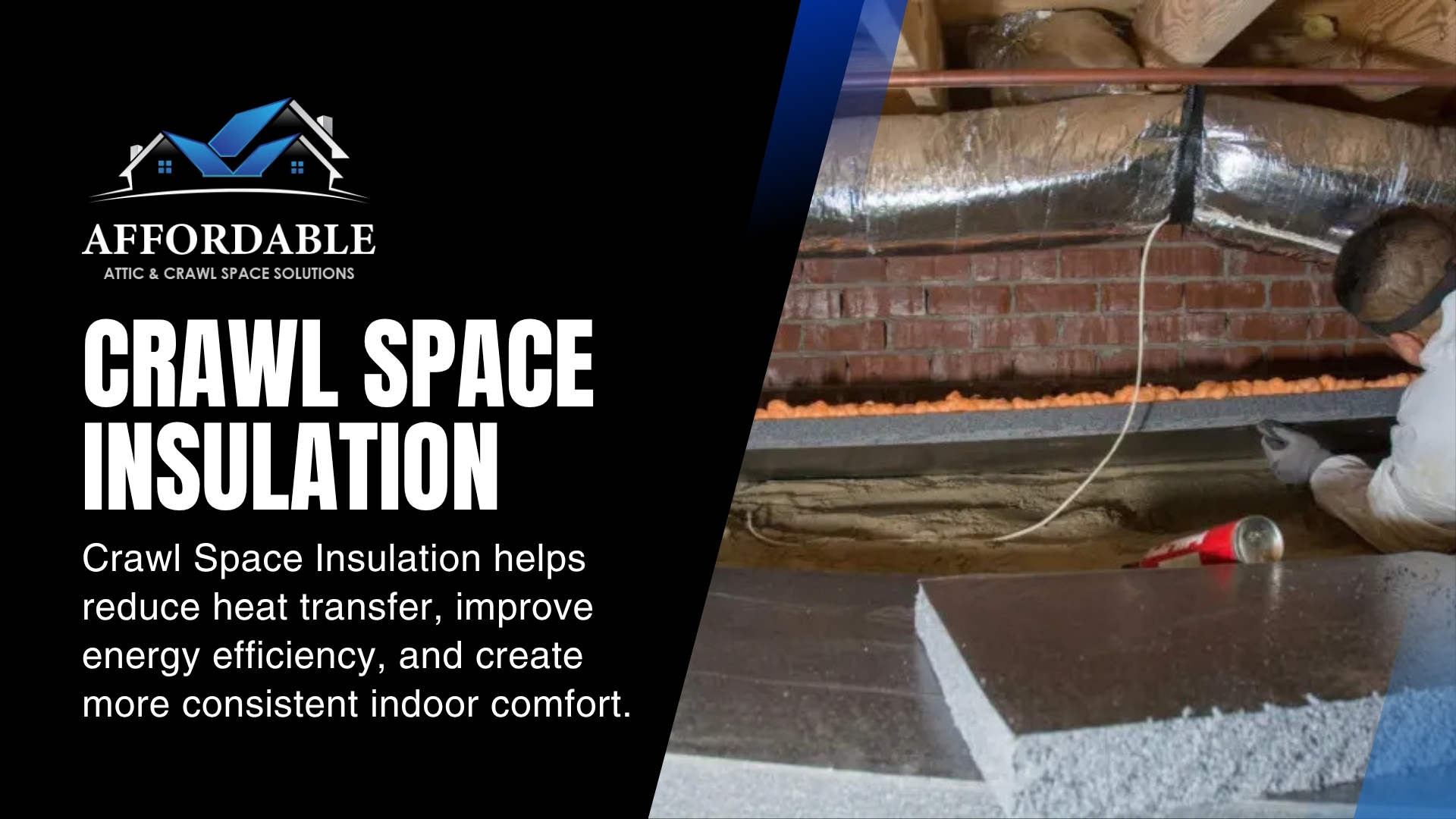
If your floors feel cold in January, your heating bill keeps creeping up, or you catch a faint musty smell drifting up from the vents, the problem is very likely sitting right under your feet. Crawl space insulation in Puyallup is one of the most overlooked upgrades a homeowner can make, and it’s also one of the most impactful. In a valley shaped by the Puyallup River, with clay-heavy soil and a wet Pacific Northwest climate, an uninsulated or poorly sealed crawl space doesn’t just waste energy. It slowly damages the wood framing above it, invites mold, and drags down indoor air quality for everyone living in the home.
This guide walks through why Puyallup crawl spaces are especially prone to problems, how insulation actually works down there, what your material options are, what it costs, and how to choose a contractor who will do the job right the first time.
Why Puyallup Homes Are Especially Vulnerable
Puyallup sits in a river valley with a naturally high water table and dense clay soil that drains slowly. Combine that with the region’s long, wet fall and winter seasons, and you get crawl spaces that stay damp for months at a time. Add the fact that many homes in neighborhoods like South Hill, Sunrise, and older sections near Downtown Puyallup were built with traditional vented crawl spaces, and you have the perfect setup for moisture problems.
Vented crawl spaces were designed decades ago under the assumption that outside air would dry out ground moisture. In practice, in a climate like ours, those vents pull in humid air more often than they let moisture escape. That humid air hits the cooler surfaces under the house, condenses, and creates the damp, musty environment that rots joists, attracts pests, and feeds mold growth.
Insulation alone won’t fix a moisture problem, but insulation paired with proper vapor barriers and air sealing addresses both the temperature loss and the humidity issue at the same time. That combination is what separates a lasting fix from a temporary patch.
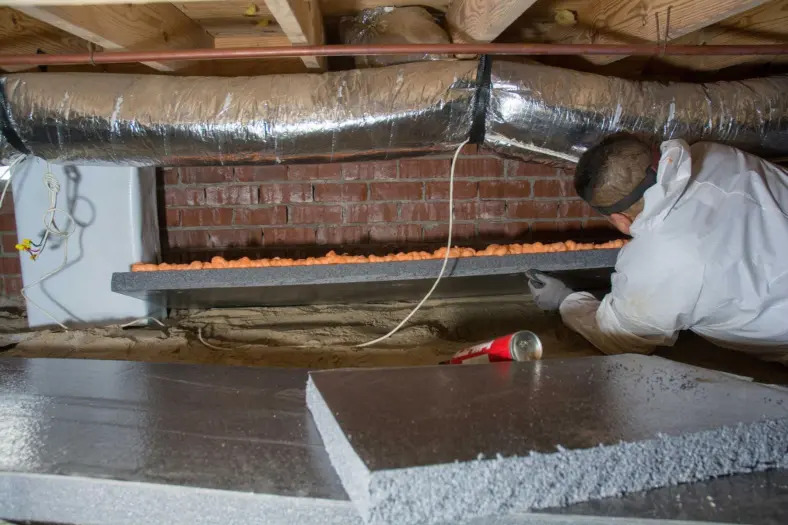
Signs Your Crawl Space Needs Insulation
Most homeowners never go under their house, so the warning signs show up elsewhere first. Here’s what to watch for:
- Floors that feel noticeably cold even when the thermostat is set normally
- A musty or earthy smell that’s strongest near baseboards or floor vents
- Rising energy bills without any change in usage habits
- Visible condensation on pipes, ductwork, or the underside of subflooring
- Sagging or bouncy spots in the floor, which can indicate moisture-weakened joists
- Increased pest activity, since damp crawl spaces attract insects and rodents
- Higher indoor humidity throughout the house, even in rooms far from the crawl space
If two or more of these sound familiar, it’s worth having the crawl space inspected before the damage progresses from “annoying” to “expensive.”
Insulation vs. Encapsulation: Understanding the Difference
This is the single biggest point of confusion homeowners run into when researching crawl space insulation in Puyallup, so it’s worth explaining clearly.
Insulation refers to the material installed to slow heat transfer, typically between the floor joists or along the foundation walls. Its job is thermal: keeping conditioned air inside the home and unconditioned air outside.
Encapsulation refers to sealing the entire crawl space with a heavy-duty vapor barrier that covers the ground and often the foundation walls, combined with sealing vents and sometimes adding a dehumidifier or conditioned air supply. Its job is moisture control.
In a dry climate, insulation alone might be enough. In Puyallup’s wet, clay-soil environment, insulation without a vapor barrier is a short-term fix. Moisture will eventually saturate fiberglass batts, causing them to sag, lose R-value, and become a breeding ground for mold. That’s why most reputable local contractors recommend pairing insulation with at least a basic ground vapor barrier, even if a full encapsulation system isn’t in the budget yet.
Types of Crawl Space Insulation Material
Not all insulation performs the same way in a damp environment. Here’s how the common options compare for a Puyallup crawl space.
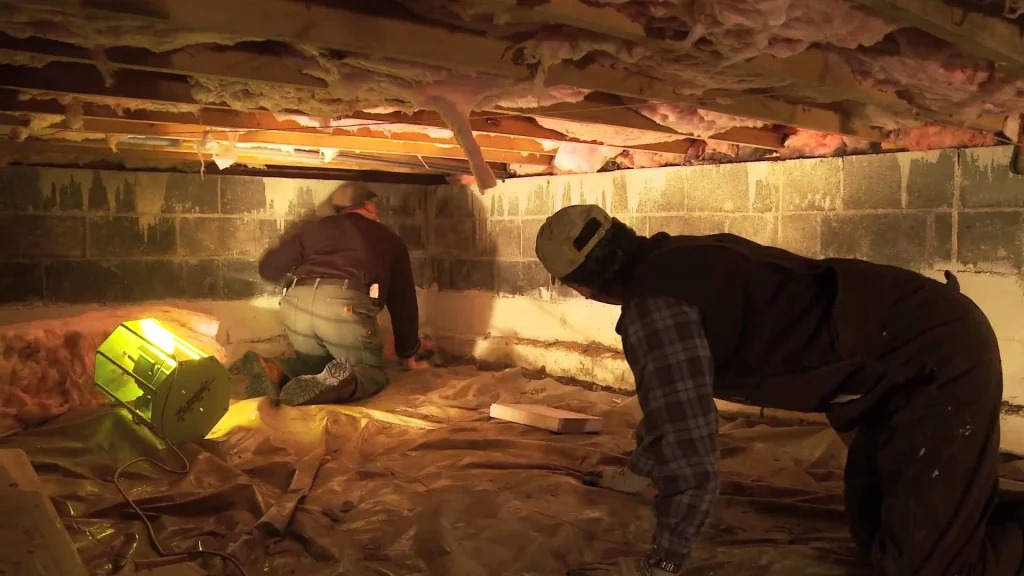
Fiberglass batt is the most common material used historically because it’s inexpensive and easy to install, but it performs poorly once it absorbs moisture, which is a real risk in an area like Puyallup.
Closed-cell spray foam costs more upfront but resists moisture almost completely, adds structural rigidity, and doubles as an air seal. It’s increasingly the preferred choice for encapsulated crawl spaces in the Puget Sound region.
Rigid foam board is typically used along foundation walls in encapsulated crawl spaces rather than between joists, and it holds up well in damp conditions.
Mineral wool offers a middle ground: better moisture tolerance than fiberglass, fire-resistant, but still not as robust as spray foam in a consistently wet environment.
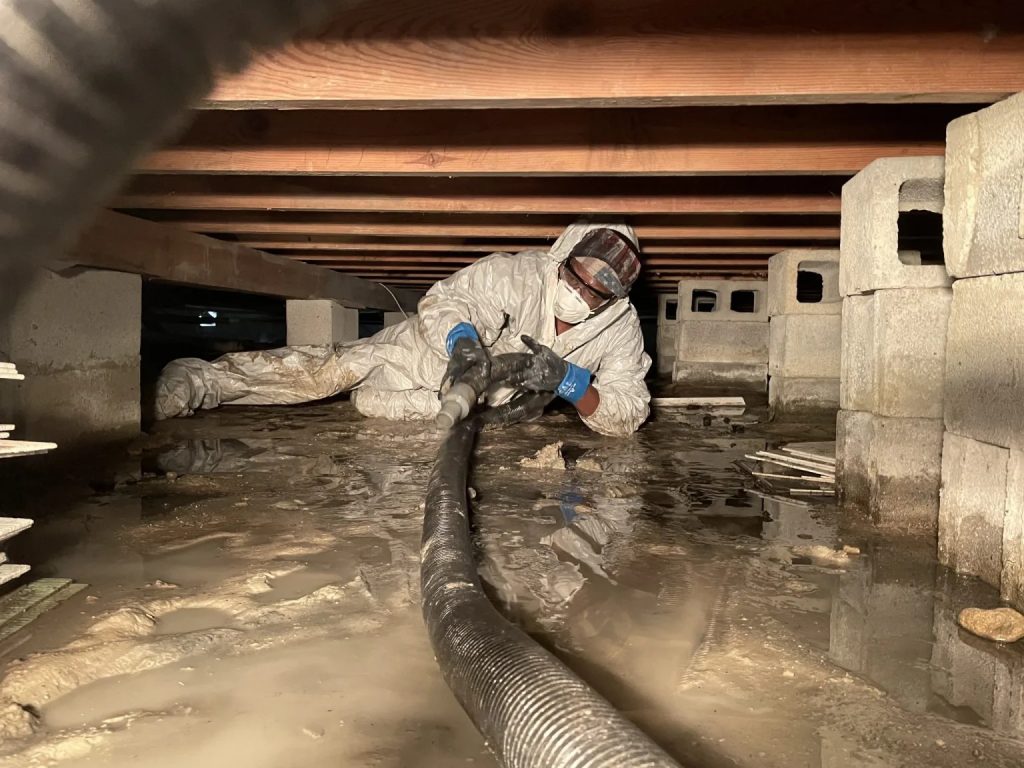
The Crawl Space Insulation Process, Step by Step
A proper installation isn’t just stapling batts between joists. Here’s what a thorough process looks like:
- Inspection and moisture assessment. A technician checks for existing water intrusion, standing water, wood rot, mold, and pest activity before any material goes in. Insulating over an active moisture problem just hides it.
- Remediation, if needed. Damaged insulation, mold-affected wood, and debris are removed and treated before new material is installed.
- Air sealing. Gaps around plumbing penetrations, rim joists, and foundation cracks are sealed to stop drafts and reduce moisture entry points.
- Vapor barrier installation. A ground-covering vapor barrier (and wall barrier, if encapsulating) is installed to block soil moisture from rising into the space.
- Insulation installation. Material is fitted snugly between joists or against foundation walls, avoiding compression, which reduces effectiveness.
- Vent sealing or conditioning (if encapsulating). Foundation vents are sealed and, in some setups, a dehumidifier or supply duct is added to actively manage humidity.
- Final inspection. The contractor checks for gaps, verifies proper coverage, and documents the work, often with photos, for the homeowner’s records.
Skipping steps 1 through 3 is the most common shortcut low-cost providers take, and it’s exactly why some homeowners end up paying for insulation twice.
Benefits of Professional Crawl Space Insulation
The payoff from doing this correctly shows up in several places at once:
- Lower energy bills. The Department of Energy has long identified the crawl space as one of the biggest sources of heat loss in homes with this foundation type. Proper insulation reduces the workload on your furnace and AC.
- Warmer, more even floors. Rooms directly above the crawl space stop feeling noticeably colder than the rest of the house.
- Reduced humidity and mold risk. Controlling moisture at the source protects both the structure and indoor air quality.
- Fewer pest problems. Sealed, dry crawl spaces are far less attractive to rodents and insects than damp, open ones.
- Protected structural wood. Joists and subflooring last longer when they’re not sitting in a consistently damp environment.
- Higher resale value. A documented, professionally sealed crawl space is a selling point during a home inspection rather than a red flag.
What Does Crawl Space Insulation Cost in Puyallup?
Pricing depends on square footage, crawl space height and accessibility, current condition, and whether you’re insulating only or combining insulation with a vapor barrier or full encapsulation. As a general range for the Puyallup area:
- Insulation only (batt replacement): Typically the most affordable option, suited for crawl spaces without active moisture issues.
- Insulation plus basic vapor barrier: A mid-range investment that addresses both temperature and baseline moisture control.
- Full encapsulation with spray foam and dehumidification: The highest upfront cost, but the most comprehensive long-term solution, especially for homes with chronic moisture, mold history, or very tight, hard-to-access crawl spaces.
Homes with existing mold remediation needs, rodent damage, or extremely low clearance will cost more due to added labor. A trustworthy contractor will walk the crawl space with you (or send photos/video if access is tight) and explain exactly what’s driving the quote before any work begins, rather than giving a flat number over the phone.
How to Choose a Crawl Space Insulation Contractor in Puyallup
Not every insulation company handles crawl spaces with the same level of care. Before hiring, ask about:
- Licensing and insurance. Confirm active Washington state contractor licensing and liability coverage.
- Moisture testing. A contractor who checks moisture levels before quoting is thinking about the long-term fix, not just the sale.
- Material warranty. Ask what’s covered, for how long, and whether it transfers if you sell the home.
- Local experience. A crew familiar with Puyallup’s soil and climate patterns will spot risk factors a generic national franchise might miss.
- Photo or video documentation. Since most homeowners never see their own crawl space, before-and-after documentation matters for accountability.
- Clear scope of work. A detailed, written estimate that separates insulation, vapor barrier, and any remediation work line by line, rather than one vague total.
A quick walk-through of these points on the phone before scheduling an in-person estimate will filter out a lot of lower-quality providers immediately.
Maintaining Your Crawl Space After Installation
Insulation isn’t a one-and-done fixture. To protect the investment:
- Check crawl space access doors and vents (if not encapsulated) once or twice a year for damage or gaps.
- Watch for any new water stains, especially after heavy Pacific Northwest storms.
- Keep gutters and downspouts directing water away from the foundation, since exterior drainage problems are one of the most common causes of crawl space moisture returning.
- If a dehumidifier was installed as part of encapsulation, check and clean it per the manufacturer’s schedule.
- Schedule a follow-up inspection every few years, particularly after any plumbing work near the crawl space.
Homeowners who stay on top of these small checks rarely need major crawl space repairs down the line.
Conclusion
Crawl space insulation in Puyallup isn’t just about comfort, though warmer floors and lower energy bills are a welcome bonus. In a valley with clay soil, a high water table, and a wet climate, it’s a structural and health decision. Moisture that’s ignored under the house eventually shows up as rot, mold, and expensive repairs above it. Whether your home needs a straightforward insulation refresh or a full encapsulation system, getting an honest, thorough assessment from a local, experienced contractor is the first step toward a drier, more efficient, longer-lasting home.
FAQ’s
How much does crawl space insulation cost in Puyallup, WA?
Cost depends on square footage, crawl space condition, and whether you add a vapor barrier or full encapsulation. Homes with existing moisture damage or tight access typically cost more. A contractor should provide a detailed, itemized estimate after an in-person or video assessment.
How do I know if my crawl space needs insulation?
Cold floors, musty odors, rising energy bills, visible condensation on pipes, and increased pest activity are the most common warning signs. If you notice two or more, it’s worth scheduling a professional inspection before the issue worsens.
What’s the difference between crawl space insulation and encapsulation?
Insulation slows heat transfer to improve comfort and energy efficiency. Encapsulation seals the entire crawl space with a vapor barrier and sealed vents to control moisture. Many Puyallup homes benefit from both, given the area’s wet climate and clay soil.
Is fiberglass or spray foam better for crawl space insulation?
Fiberglass is more affordable but loses effectiveness once it gets wet. Closed-cell spray foam costs more upfront but resists moisture almost completely and adds air sealing, making it a stronger long-term choice in damp climates like Puyallup’s.
How long does crawl space insulation installation take?
Most standard insulation jobs take one day. Full encapsulation projects with vapor barriers, sealing, and dehumidification systems can take one to three days depending on crawl space size and condition.
Can I insulate my crawl space myself?
It’s possible for very small, easily accessible, moisture-free crawl spaces, but most Puyallup crawl spaces have existing moisture concerns that require assessment and remediation first. A professional installation also typically comes with a warranty that DIY work does not.